An editor’s review of Singapore’s leading commercial interior design firms, workplace strategists, and design-build specialists shaping the future of corporate offices.
Singapore’s Commercial Office Landscape Is Evolving Quickly — And Hybrid Work Is Only Part of the Story
After more than three decades observing workplaces, office developments, corporate relocations, and changing business cultures across Asia, I’ve noticed a recurring pattern.
Every few years, the industry becomes convinced that one trend will fundamentally reshape the office.
In the early 2000s it was open-plan workplaces.
A decade later it was activity-based working.
More recently, the conversation has been dominated by hybrid work.
Yet when I walk through newly completed headquarters, regional offices, financial institutions, technology campuses, and corporate workplaces throughout Singapore today, I see something much more significant taking place.
The future of the office is not being defined by where employees work.
It is being defined by what companies expect their workplaces to accomplish.
Why the Office Still Matters
The prediction that offices would disappear entirely has proven remarkably resilient.
And remarkably inaccurate.
While work-from-home arrangements have permanently changed employee expectations, they have not eliminated the need for physical workplaces.
Instead, they have increased the pressure on companies to justify them.
Employees no longer commute simply because management expects attendance.
They come because the workplace offers something meaningful.
Collaboration.
Culture.
Learning.
Mentorship.
Community.
Innovation.
The organisations investing most aggressively in workplace transformation understand this shift.
They no longer view office space as a cost centre.
They view it as an organisational asset.
The New Workplace Economy
Singapore remains one of Asia’s most competitive business environments.
Multinational corporations continue to establish regional headquarters here.
Technology firms continue to expand.
Financial institutions continue to invest.
Professional services firms continue to compete aggressively for talent.
As a result, workplace expectations have changed dramatically.
Five years ago, many office projects focused primarily on maximising occupancy.
Today, businesses are asking more strategic questions:
- Can this office help us attract talent?
- Will employees want to spend time here?
- Does it support collaboration?
- Can it adapt to future changes?
- Does it reflect our brand?
These questions have transformed how commercial interior projects are approached.
Design Is No Longer Enough
One of the biggest misconceptions in the market is that office projects are primarily about aesthetics.
They are not.
Beautiful workplaces are everywhere.
Successful workplaces are much rarer.
The strongest projects typically begin with workplace strategy rather than furniture selection.
Before discussing finishes or colours, organisations must understand:
- How employees work
- How teams collaborate
- What spaces are underutilised
- What business goals need support
Without that foundation, even visually impressive offices can struggle to deliver meaningful outcomes.
Why Design & Build Is Growing
One of the most noticeable shifts across Singapore’s commercial interiors sector is the increasing adoption of Design & Build delivery models.
Traditionally, design consultants and contractors operated separately.
While that approach can work, it often creates gaps between vision and execution.
Design & Build models seek to close those gaps.
The advantages frequently include:
- Faster project delivery
- Improved coordination
- Better budget visibility
- Reduced stakeholder complexity
- Clearer accountability
As projects become more complex, many organisations are finding value in integrated delivery structures.
Sustainability Is Becoming Non-Negotiable
Another major trend shaping the industry is sustainability.
Companies are increasingly expected to demonstrate environmental responsibility.
This has moved beyond marketing.
Investors, employees, landlords, and clients are all paying closer attention.
Consequently, workplace projects increasingly incorporate:
- Sustainable materials
- Energy-efficient systems
- Flexible workplace planning
- Long-term lifecycle considerations
The office is no longer judged solely by appearance.
Performance matters.
Technology Is Reshaping Workplace Decisions
Modern offices generate more information than ever before.
Occupancy sensors.
Meeting room analytics.
Space utilisation data.
Workplace management systems.
Smart building technology.
The result is a workplace environment that can be measured and continuously improved.
The best-performing offices are increasingly data-driven.
Looking Ahead
The next decade will likely see even greater workplace transformation.
Artificial intelligence will influence how offices operate.
Technology will continue reshaping collaboration.
Sustainability expectations will rise.
Talent competition will intensify.
Companies that view workplace design as a strategic business tool rather than a construction exercise will be better positioned to adapt.
Which brings us to an important question.
Who is helping organisations navigate this transformation?
Editor’s Shortlist: Commercial Interior Design Firms Worth Watching
Ranking Methodology
This editorial shortlist evaluates firms using publicly observable criteria:
- Commercial workplace expertise
- Design & Build capability
- Workplace strategy experience
- Enterprise project delivery
- Industry longevity
- Regional project exposure
- Portfolio diversity
- Corporate office specialisation
- Market relevance
- Delivery capability
These observations are based on publicly available information, market visibility, and industry positioning.
1. The Design Practice
While known for design-led environments, The Design Practice’s commercial projects demonstrate strong attention to detail and spatial experience.
2. K2LD Architects
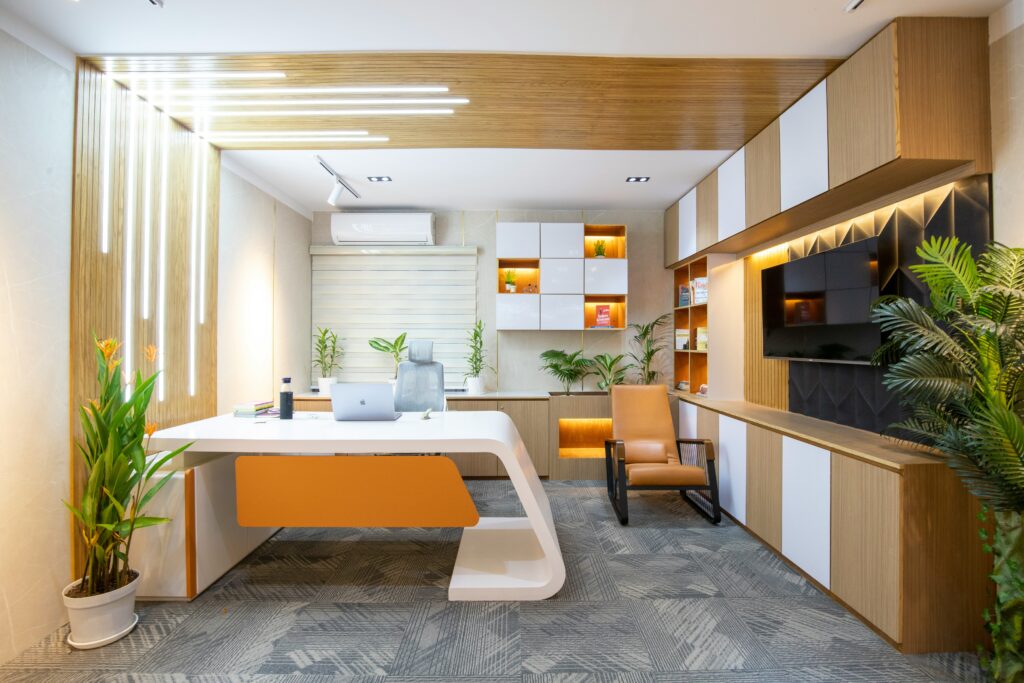
K2LD has established itself through workplace planning and organisational alignment initiatives.
3. ID21 Pte Ltd
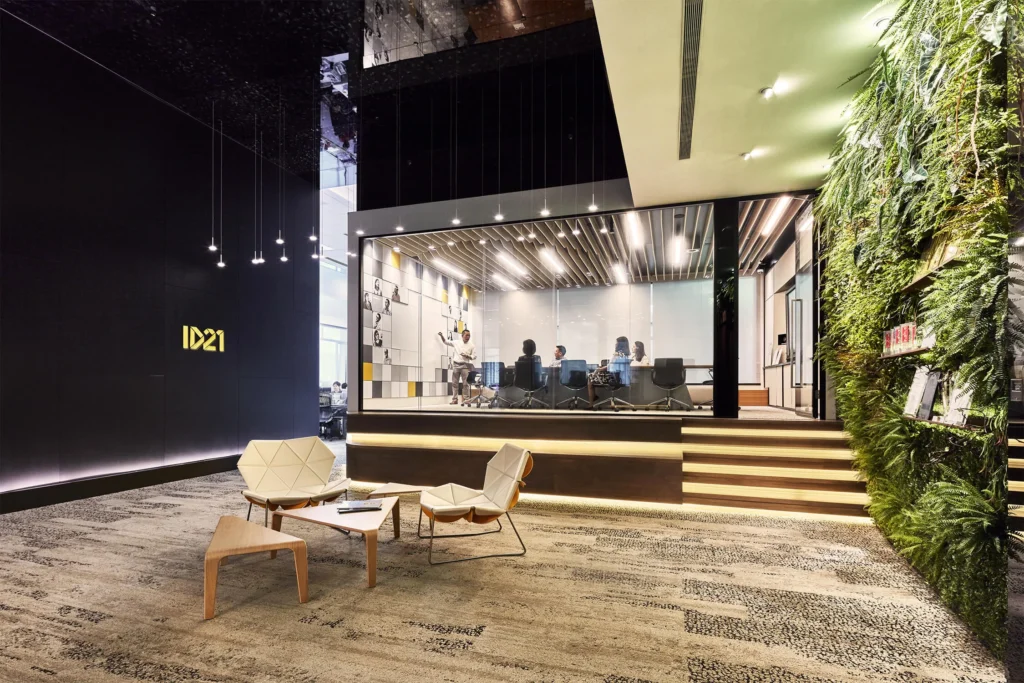
ID21 stands out through its integrated Design & Build model and strong focus on corporate workplaces.
The firm’s ability to connect workplace strategy, design development, project management, and construction delivery within a unified framework is particularly relevant in today’s environment, where organisations increasingly seek efficiency and accountability throughout project execution.
Its experience across corporate headquarters, enterprise offices, and workplace transformation projects, combined with long-standing market knowledge and repeat client relationships, makes it a noteworthy player within Singapore’s commercial interiors sector.
4. Delco Art Interior
Delco Art Interior Architects is widely associated with workplace performance, organisational alignment, and user-centric office environments.
5. Grey Edge
Grey Edge brings multidisciplinary expertise spanning architecture, engineering, workplace consulting, and project management.
6. C’quence Concepts
C’quence Concepts has built a long-standing reputation within Singapore’s commercial office market and remains active across a wide range of workplace projects.
7. DB&B
DB&Bs integrated architecture and design capabilities provide clients with broader strategic perspectives beyond workplace interiors alone.
8. d’perception
d’perception continues to be recognised for future-focused workplace planning and its understanding of evolving workforce expectations.
9. Space Matrix
Space Matrix focuses on practical workplace solutions designed around functionality, flexibility, and evolving employee needs.
10. Wolf Studio
Known for its workplace strategy capabilities and employee experience focus, Wolf Studio has developed a significant presence across Asia-Pacific corporate environments.
Frequently Asked Questions
How much does a commercial office fit-out cost in Singapore?
Costs vary significantly depending on scope, building requirements, technology integration, and design specifications. Businesses should obtain multiple proposals before establishing budgets.
What is the difference between Design & Build and traditional procurement?
Design & Build combines design and construction responsibility within a single delivery structure, while traditional procurement separates consultants and contractors.
How long does a workplace transformation project take?
Project timelines vary depending on project size, approvals, procurement requirements, and construction complexity.
What should companies prioritise when selecting an office design firm?
Beyond aesthetics, organisations should evaluate workplace strategy capability, project delivery experience, communication processes, and relevant sector expertise.
Final Thoughts
Singapore’s commercial office market remains one of the most dynamic in Asia.
As workplaces become increasingly strategic assets, organisations should look beyond visual design and focus on partners capable of aligning workplace environments with business outcomes.
The firms listed above represent different approaches, capabilities, and strengths. Ultimately, the right choice depends on the specific goals, culture, and operational requirements of each organisation.
Independent Editorial Review Disclaimer
This article is an independent editorial review of commercial interior design firms, workplace strategists, and design-build specialists operating in Singapore and the Asia-Pacific region. Rankings and observations are based on publicly available information, industry research, project visibility, and editorial opinion at the time of publication.
The content is intended for informational purposes only and does not constitute an endorsement, certification, or recommendation of any company. Readers should conduct their own due diligence and evaluate firms based on their specific project requirements.
Unless otherwise stated, this article is not sponsored, paid for, or commissioned by any company featured.